
Are you looking for fun, easy Montessori toddler activities that will support your child’s development?

Here are 5 essentials that will help you create easy Montessori toddler activities at home:
- Encourage collaboration around the home throughout each day.
- Create gentle routines that allow risk-taking within safe limits.
- Value their natural drive to explore and repeat things many times.
- Observe your child – what are they most interested in playing with today?
- Avoid interrupting when you see your child is concentrating on something.
Let’s look at each of these in more detail:
1. Encourage collaboration around the home throughout each day:
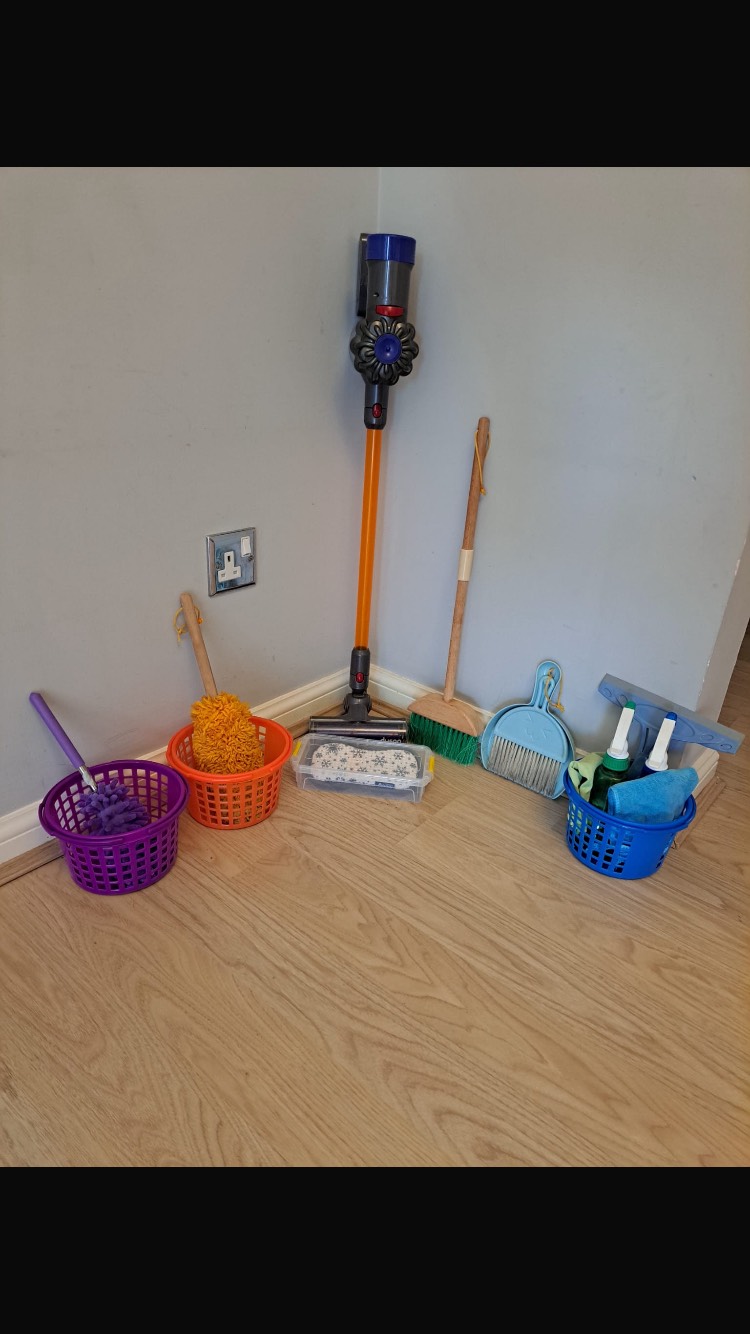
Invite your child to participate in all the daily activities that contribute to your home life. Encourage them to help with everything you do (see the list in section 4 for some easy ideas such as cooking, cleaning and water-play). Participating in practical life activities at home will help your child develop:
- Independence
- Strength and coordination
- Fine motor skills
- Self-discipline
- Social skills and caring for others needs
- Logical sequencing
- Increased vocabulary
- Maths skills
- Turn-taking and patience
Take them into every room with you so they can watch and absorb how life works. Throughout the day there are many opportunities to collaborate: carrying objects, folding washing, tidying activities and remembering where each thing goes. Daily routines are natural sequencing opportunities.
- Non-verbal communication is just as vital as using words, especially with little children.
- Stay relaxed about mess and spills – children find the cleaning up just as fun as the main activity!
- Mopping, sweeping, using a dustpan and brush or wiping with a cloth also develop coordination, concentration and their ability to complete activities to their natural conclusion.
“It is important to notice, in passing, that these are real, not make-believe activities and that they are carried out in a real and not make-believe environment. The child who is washing dusters is washing real dusters because they are dirty… where you see a child swabbing up the water spilt on the floor there has been a real accident, and she is re-establishing order in a real world. This is a matter of great importance.” (p.214, Maria Montessori: Her Life & Work)
#Montessori Tip: When you show your child how to do activities, slow your movements right down. They will be able to easily follow what you’re doing and learn how to move their body with care, just like you do. Help them develop this skill at an early age and they will avoid many accidents in the future.
2. Create gentle routines that allow risk-taking within safe limits:
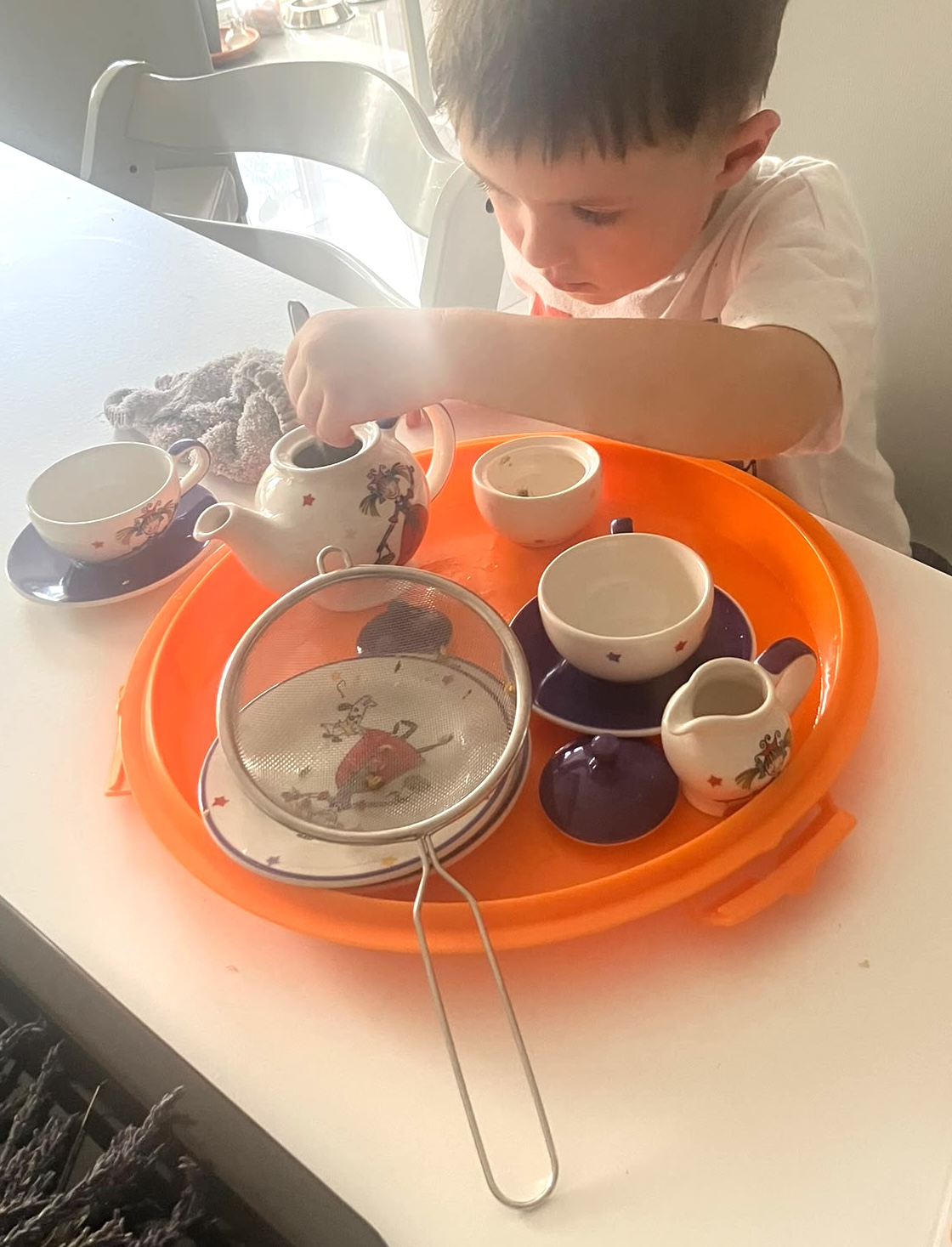
The adult’s role is to provide gentle limits that keep children safe, whilst allowing a certain amount of risk-taking that supports progress.
- Maria Montessori realised the 0-6 year old child has an ‘Absorbent Mind’.
- From birth to 6 years old, their brain is unconsciously absorbing everything they experience.
- All these experiences are used to create a human being adapted to their unique family and culture.
Montessori is about being friendly with mistakes, thinking for ourselves, finding creative solutions for challenges. These characteristics are the key to successful relationships, a meaningful career and happy life.
#Montessori Tip: let children use breakable crockery. When something breaks, it shows a natural consequence to the child and gives the message they need to be more careful. We don’t need to tell them off or make them feel bad. We simply show how to safely clear up the broken pieces (the clear-up may or may not include your child).
Either way, the gentle lesson is taught: some things need care. Afterwards, your child will naturally be more careful with delicate objects and this develops self-control and self-discipline in a practical, non-judgemental way.
- Let your child explore your home and outdoors as freely as possible. If you feel worried you can give them positive encouragement, e.g. “I know you can climb the slide slowly and carefully – all the way to the top! I’ll stand behind you and watch you climb – go for it!”
- Another example could be when you invite them to help you with cooking. Cutting fruit and vegetables is an essential part of food preparation but can be worrying if you feel unprepared.
- Set a clear limit before you start, e.g: “My knife is sharp. I’ll use this one and you can use your special toddler knife. You can hold your knife on the handle and press down to cut your fruit. That’s it, you’re doing it!”
3. Value their natural drive to explore and repeat things many times:
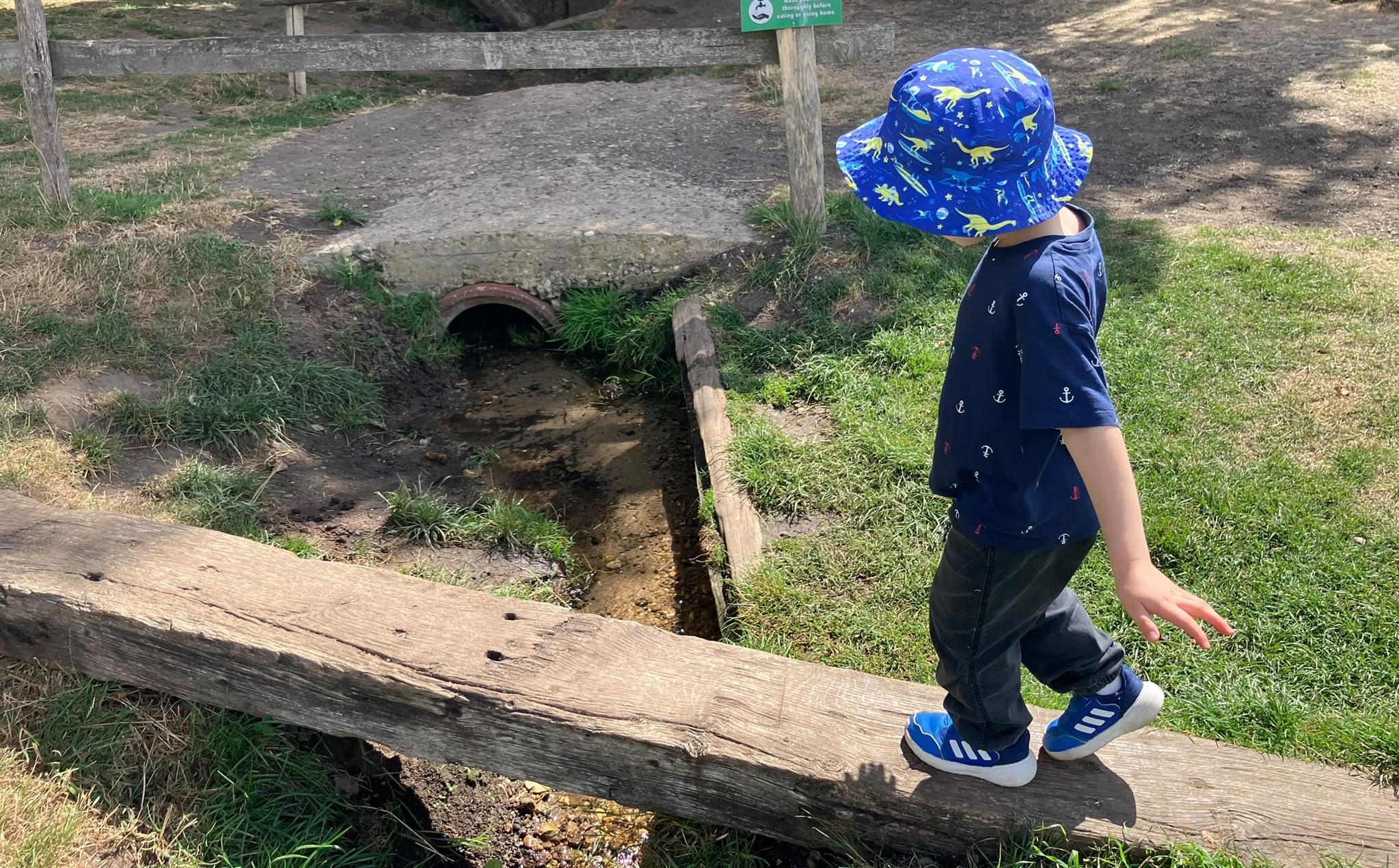
Repetition is how the human brain works. Think about learning to walk – a baby needs to try again and again, each moment moving closer to achieving their aim of walking. It requires so many tiny goals, a great deal of perseverance, and innate self-belief.
Every baby is born with these skills and Maria Montessori understood this. She saw the limitless potential of the child. She realised that every child, all around the world, has the same unconscious developmental drives.
Your child has infinite potential. They can achieve their heart’s desire if they live in a supportive environment that allows them to explore, repeat, make mistakes, and find solutions for themselves.
- A baby never gives up trying to walk – no matter how many times they fall down.
- They keep trying in different ways, showing huge strength of character and determination.
- They instinctively believe they are capable of walking, no matter how long it takes them.
- You can see their deep concentration and focused attention on their goal.
- One day their sustained efforts pay off and they are able to walk independently!
- They are joyous and self-motivated! Then, they keep going – practising and refining their movements to achieve greater balance and coordination.
When your child wants to repeat something over and over again, let them. Stand back, watch them and notice how they gradually improve this skill, challenge themselves to refine the skill, and eventually complete it to their satisfaction.
At this point they may come over to you for acknowledgement and positive affirmation of their achievement.
- This is a great opportunity to comment on what you saw they achieved, rather than a generic response like ‘Good job’.
- Instead, offer constructive and meaningful praise, e.g. “Wow, you climbed the ladder all by yourself!” or “You used so many different colours in your picture!”
Children love exploring and testing limits. It’s important to keep them safe, and just as important to let them be creative and brave. Find a balance between what seems easy and what will also help them grow.
4. Observe your child – what are they most interested in playing with today?
What are your child’s favourite toys and activities? Here are some suggestions for collaboration and independent play:
 Water-play:
- Washing hands; washing up; washing fruit and vegetables for meals
- Spray cleaning; scrubbing and wiping chairs, tables and cupboards
- Washing wellington boots or summer sandals
- Flower arranging; watering plants; wiping leaves with a sponge
- Mopping floors; washing windows
- Cleaning a car, bike, or other outdoor toys
- Scrubbing patio stones or fences
- Water painting walls or fences
 Food and drink:
- Serving camomile tea
- Pouring a drink of water
- Food preparation, e.g. cutting a banana or pear, peeling a tangerine, squeezing lemon or orange juice to add to a glass of water
- Measuring, grating, peeling, scooping, mixing
- Setting the table for snack and meals; clearing away afterwards
- Finding ingredients and bringing all the equipment for cooking and baking
 Self-Care:
- Wiping hands and face after meals;
- Brushing teeth; brushing hair; wiping a runny nose
- Taking off and/or putting on shoes, socks, coat and other clothing independently
- Practising clothes fastenings like velcro, zips, buttons and toggles
- Toileting, potty learning, collaborating in nappy changes whenever possible
 Cleaning
- Dusting leaves, shelves and windowsills
- Drying up spills; mopping; sweeping
- Wood polishing with olive oil; shoe polishing with beeswax
- Folding clean cloths and putting them away
- Cleaning a highchair, learning tower or pushchair
 Art and Craft:
- Drawing; painting
- Threading; lacing
- Playdough; clay; beeswax
- Stickers; washi tape
- Cutting with scissors
- Plaiting or twisting pipe cleaners
 Outdoor:
- Digging; planting
- Weeding; pruning
- Sweeping; raking
- Pushing a wheelbarrow; pulling a wagon
- Drawing chalk pictures and washing them off afterwards
 Language and music:
- Reading stories, poems, rhymes and factual books
- Singing nursery rhymes and songs you love
- Making up songs about things your child is interested in – use familiar tunes and make up new words
- Listening to a variety of music played through high-quality speakers
- Playing percussion instruments, xylophone or simple keyboard – exploring sound, beat and rhythm
5. Avoid interrupting when you see your child is concentrating on something:
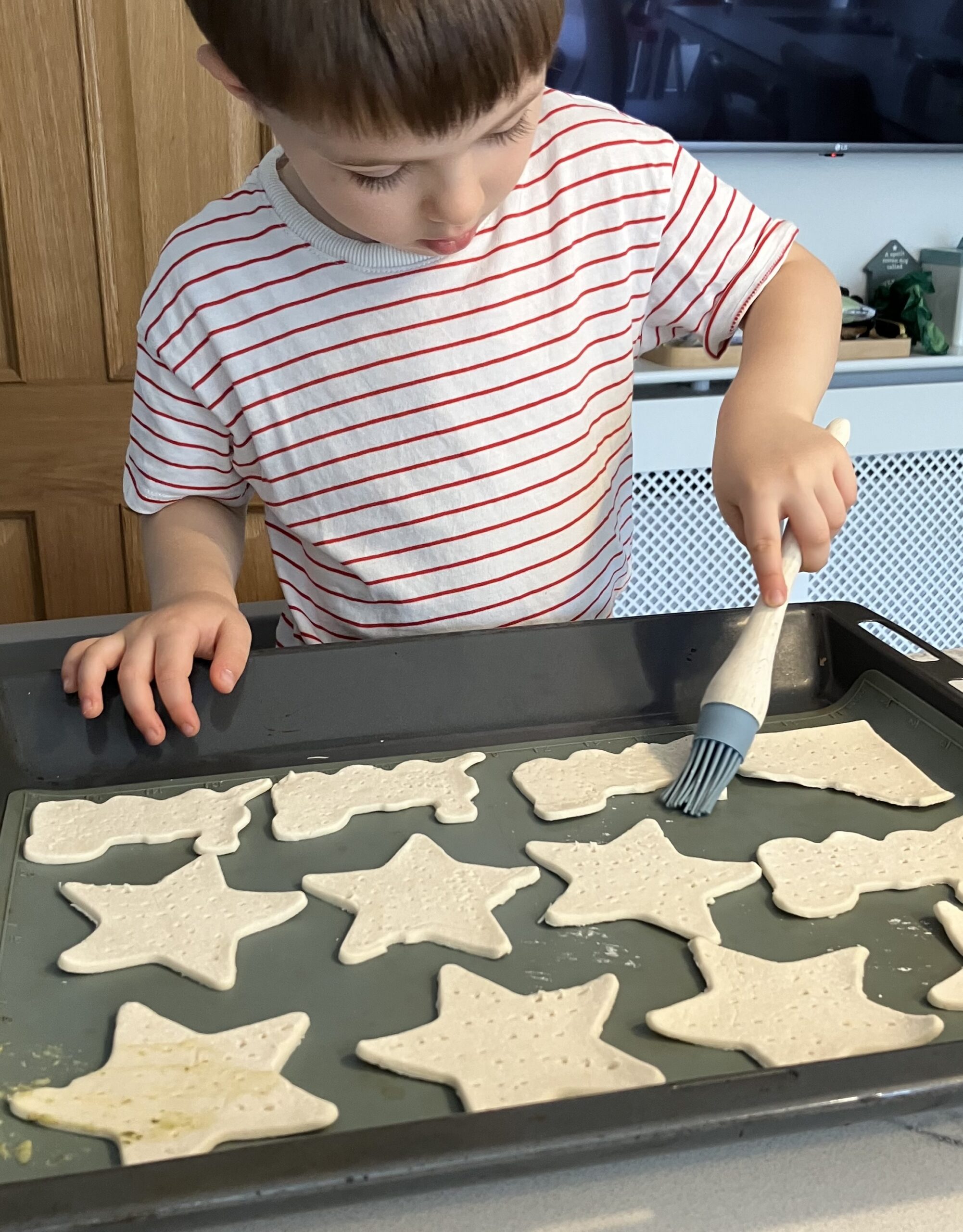
Do you sit back and allow your child time to play independently and think creatively? This helps them develop coordination, independence, language, executive functions and self worth. Watch how they naturally discover interesting variations and find solutions to challenges in most situations – without needing help from an adult.
“So, whatever intelligent activity we chance to witness in a child – even if it seems absurd to us, or contrary to our wishes (provided, of course, that it does him no harm) – we must not interfere; for the child must always be able to finish the cycle of activity on which his heart is set.” (p.147, The Absorbent Mind)
Of course, when they do need help you’ll be there to step in. But the important part is to just be nearby, so you can help when necessary. This might be giving language that enhances their activity, or helping with one small part they are stuck on. Then you can step back again and let them continue.
This shows you trust and value their efforts. Your child can flourish when you value their interests and respect these attempts to achieve mastery through concentrated repetition.