
I am often asked what makes something ‘Montessori’?
I’ve written this blog to describe the main points. I hope this information helps you create a wonderful home or classroom environment for the children!
If you would like to gain a deeper understanding of all this you might like to join our online courses or Montessori workshops. All are designed so you’ll feel informed, empowered and inspired to create a wonderful home environment for your child 🙂
Read on to discover What is Montessori – I would love to hear your thoughts.
What is AMI Montessori?
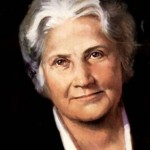
When Dr Maria Montessori first began training teachers, many people took bits and pieces of the practice, and started to use them in a variety of ways. The Association Montessori Internationale (AMI) was established in 1929 to maintain the integrity of her life’s work. It combines every aspect of the practice to ensure that children get the most out of their experiences.
What are the fundamental principles that create a Montessori experience?
An authentic Montessori environment encompasses respect for all, individual exploration, freedom to speak, move and be involved in all aspects of daily life. An AMI Montessori teacher has been thoroughly trained to guide children towards productive and challenging experiences. We support children to be independent, free-thinkers, capable, assertive and kind.
- Freedom to move
- Language enrichment
- Freedom within limits
- Choices and natural consequences
- Calm, kind, clear, consistent
- Practical life skills
- Faith in your child
- Patience
- Interesting life experiences
- Emotional acceptance
Is Montessori just letting children do whatever they want?

It is true that Montessori is all about giving children choices, treating them as individuals, and encouraging them to explore and make their own mistakes and observations. But it is not about letting them run riot. In fact respect for others, kindness, collaboration and compassion are all key parts of what we do.
Montessori promotes hands on, collaborative learning that gives children a real sense of joy in learning – something that will go a long way for their future and enables them to develop the capacity to become happy and fulfilled adults. Our goal for education is to create a peaceful world with respect, love and acceptance of everyone. Dr Montessori even wrote a book called ‘Education for Peace’.
“Establishing lasting peace is the work of education; all politics can do is keep us out of war.” (Maria Montessori)
What is the Absorbent Mind?
Little children have a totally different mind to ours and this is often the cause of misunderstandings, arguments, anger and long tantrums. Maria Montessori discovered this special mind and named it the ‘Absorbent Mind‘. It lasts from birth to around 6 years and is the secret to your child creating themselves in their entirety.
The child possesses, in his unconscious, a power which is different from any we possess as conscious people. When we study the child we must realise that his form of mind is different from the form of mind we adults possess. This conclusion is different from the general one, which is that the child does not possess a mind because his mind is so different from our own. On the contrary, the child’s powers are superior to ours. He is endowed with possibilities we no longer possess. (Maria Montessori, The Absorbent Mind)
The Absorbent Mind functions at two levels: from 0-3 years it’s unconscious and children aren’t aware of what they are learning. From 3-6 years it becomes conscious and children realise that they are learning (although they still find it very easy). After 6 years, the mind develops into a reasoning mind like the adult’s and everything changes.
How does a child develop their will?

The ‘Hormé‘ is a powerful life force; an energy that pushes humans to create ourselves during these fundamental years. It functions most strongly during the first 3 years. The Hormé is gradually replaced by the Will.
When tiny children are acting from the force of the Hormé they have no choice but to obey that force.
It’s so strong that it pushes them to interact with their environment constantly. Children under 3 years old who may be called ‘naughty’ are actually being obedient to the Hormé. They can’t deny that push to explore life and take what they need from their environment to construct their whole selves – personality, intelligence, understanding, perspectives, beliefs etc.
“Hormé belongs to life in general, to what might be called the divine urge, the source of all evolution. This vital force for growth stimulates the child to perform many actions and, if he is permitted to grow normally, without being hindered, it shows itself in what we call the ‘joy of life’. The child is always enthusiastic, always happy.” (Maria Montessori, The Absorbent Mind)
The ‘Will‘ develops as the Hormé fades, around 3 years +. You can help children create a strong, positive will by encouraging lots and lots of independence in simple daily activities, e.g: dressing, eating, toileting, cleaning, sorting, tidying, bathing and sleep routines. There’s no need to ‘break’ their will to get them to do what you want. Instead, use encouragement to redirect their attention and entice them to do things, e.g. “It’s time to make lunch! I wonder, would you like to wash the carrots or mash the potatoes?”
How do children create the ‘human’ parts of themselves?
The most fundamental, unconscious type of our human memory is called the ‘Mneme’. We aren’t aware of having learned things like walking and talking during the first 0-3 years because these basic skills were created unconsciously and stored in a very special part of our brain.
“The developing child not only acquires the faculties of man: strength, intelligence, language; but at the same time, he adapts the being he is constructing to the conditions of the world about him. And this it is that gives virtue to his particular form of psychology, which is so different from that of adults… Adults admire their environment; they can remember it and think about it; but the child absorbs it.” (Maria Montessori, The Absorbent Mind)
These special memories can be tapped into through hypnosis, for example to recall birth experiences down to the smallest details, but they are very different type to our conscious memories.
Children use their active life experiences to become a person of their culture, country, time and place. Whatever language(s) you speak, beliefs you hold, likes and dislikes you have, choices and decisions you make – all these are absorbed by children to create a person who fits into this world.
It’s really important that you’re aware of the massive impact your words, thoughts, feelings and actions have on your child’s development during these first few years. You are their ultimate guide on how to be a human being.
“The things he sees are not just remembered; they form part of his soul. He incarnates in himself all in the world about him that his eyes see and his ears hear… this vital memory, which does not consciously remember, but absorbs images into the individual’s very life, has been given a special name… the Mneme.” (Maria Montessori, The Absorbent Mind)
When do children create language, movement, sensory development and social skills?

There are certain periods of life when a child is able to create these important human characteristics. These windows of opportunity were observed by Dr Montessori and have been confirmed by modern neuroscientists. She called them the ‘Sensitive Periods’:
- Language: 7 months in utero – 5 years
- Coordinated Movements: birth – 5 years
- Sensory Development & Refinement: birth – 5 years
- Order (routine and predictability): birth – 5½ years
- Tiny details: 1 – 3 years
- Social development: 2½ – 5 years
These critical periods are narrow windows of time during which the child must have experiences relating to the characteristics he needs to create, otherwise this opportunity will be lost forever.
“With each sensitive period that we miss, we lose an opportunity of perfecting ourselves in some particular way – often for ever. To illustrate this point Montessori had recourse to a simple and homely simile: ‘Granny is sitting by the fireside knitting a stocking. She is very old, and her eyesight is failing; and every now and then she drops a stitch without noticing it. But she goes on knitting just the same, and in due course the stocking is finished. But, on account of the dropped stitches, it is not so strong or so perfect a garment as it might have been.” (E.M Standing, Maria Montessori: Her Life and Work)
Sensitive periods are universal, time-limited and often accompanied by great joy. They build gradually, peak and then end gradually, although some overlap each other. There are three phases: absorption, elaboration and acquisition. Once finished, they are gone forever.
“From her observations of children Montessori noticed that they seem to pass through phases when they keep repeating and activity time and time again – for no apparent reason. They become totally absorbed by what they are doing and, for the time being, this is the only thing in which they are interested.” (Lesley Britton, Montessori Play & Learn)
You can help children by allowing them to spend time exploring and repeating when you can see they’re really interested in something. Please don’t worry when a very young child loves to repeat things many, many times. Repetition is a fundamental part of creating strong brain connections.
Think about how you learned to walk: by trying again and again, falling and struggling up, repeating over and over until you could stand, take a step and eventually walk! The same process happens with your child when they are creating all aspects of themselves.
How does Montessori support self-education?

Auto-education or self-education is creating an environment that contains everything a child needs to educate themselves and grow into a well-rounded human being.
A Montessori setting has activities placed strategically around the home, garden or classroom. Children can choose from these age-appropriate activities and the teacher, parent or guide demonstrates how to use them. Then the child recreates the activity in their own unique way – educating themselves, exploring variations, developing their natural creativity, and refining their coordination. The child creates their own learning path to develop universal human characteristics.
Humans are born to become independent, capable, inquisitive and self-disciplined. A Montessori environment facilitates these natural tendencies by providing a wide variety of activities and experiences so that all children can grow towards their natural potential.
“Dr. Montessori learned, as I learned, and as every teacher must learn, that only through freedom can individuals develop self control, self dependence, will power and initiative. There is no education except self-education. There is no effective discipline except self-discipline. All that parents and teachers can do for the child is to surround him with right conditions. He will do the rest; and the things he will do for himself are the only things that really count in his education.” (Helen Keller’s teacher, Anne Sullivan Macy)
What makes activities different in a Montessori setting?
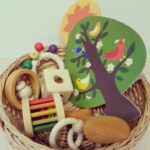
Montessori has beautiful, effective language and maths equipment that allows children to truly understand abstract concepts through physical play. We don’t use worksheets, everything is through real life experiences and loads of fun, interactive games.
Every child has opportunities and freedom to explore their own interests, and then we guide them towards other work that we know they need to do as well. Children feel heard, respected and valued because Montessori is a holistic method of education, an Aid to Life.
Can all children learn in this way?
It can be used with every child, as long as the teacher is suitably trained, open to more learning, and willing to be flexible to find ways to engage each child and support their individual needs.
Children already have an innate developmental plan within them. All we need to do is provide interesting experiences, model how to do things and then let children explore and create for themselves.
Use positive language, allow extra time for routines such as getting dressed or eating independently, set up the home or classroom in a gently ordered way so children feel confident and capable, and involve children in all aspects of their daily life. Provide a loving, secure, consistent environment that can support children’s natural development.
How can we help children grow up to be kind and respectful people?

Remember that each child has a lot going on – they’re creating a whole human being using everything they experience. Our role as guides is to show how to be kind, loving, respectful, firm and empathetic.
Children will mirror your behaviour so if you want them to speak gently and be assertive, you need to show how to do that consistently. Children need a consistent routine, gentle boundaries and lots of choices whenever possible.
If you can set a limit positively it makes a world of difference. For example: “We don’t hit people, it hurts. You CAN… pound a cushion or use your words to tell me how angry you are. It’s ok to feel angry. Tell me how you feel and then I’ll help you calm down. We’ll find another way to get what you need.”
Why doesn’t Montessori use rewards or punishments?
In Montessori we don’t use rewards or punishments and that’s a difficult concept for many people. But what it means is we pay attention to what’s actually happening, e.g:
What caused this child to behave negatively in that situation? How can we prepare them beforehand so they know what’s acceptable? Do we need to change the routine or our expectations? Is there something we could change concerning our words or body language that would diffuse the situation? Does this child need more practical life activities to help them feel capable and useful, so they don’t act out because of low self-worth?
How can adults set limits in a Montessori way?
Using positive phrases such as “You can…” or “Let’s…” gives children the message that adults have faith in them and believe in them. Having consistent routines lets children anticipate what is likely to happen next and be more cooperative.
Treating a child with kindness and offering limited choices will show you respect them as a human being, and you are willing to find a compromise that suits you both. Ask yourself how you would like to be treated when you make mistakes? Then adapt that respectful manner to use with children too!
“The ‘absorbent mind’ [0-6 years] welcomes everything, puts its hope in everything, accepts poverty equally with wealth, adopts any religion and the prejudices and habits of its countrymen, incarnating all in itself. This is the child!” (Dr Maria Montessori)
Why is there such a big emphasis on children doing things independently?

Allowing children to be as independent as possible from an early age prevents many arguments and tantrums. Even babies want to do things for themselves and will show their feelings when parents do too much.
Children are astoundingly capable when we find ways to allow their participation in life. For example, using a spoon and tiny cup at 6 months old, pulling socks off at 10 months, putting a scarf on at 12 months, setting the table at 15 months. All these feel amazing to a little child because they’re able to do them without help.
Independence is the key to developing self-worth at any early age. When a child feels positive about themselves, they are more willing to care for others and our world. They will choose positive activities and want to be helpful and kind. This all begins with the love and encouragement adults give each child every day. All the tiny moments create a big picture and lead to a healthy perspective on life.
By allowing children time and space to do things for themselves, you show you have faith in them. They are able to create a strong sense of self-belief and happily push through challenges of their own choosing.
What does it mean to ‘sit on your hands’?
Sit back and observe the children. I’ve been to many so-called Montessori environments that have lots of equipment but forget the important principles of independence and respect for the child’s self-construction. I always remember one of our AMI 3-6 Diploma trainers telling us to “Sit on your hands when you think you need to help a child.”
It’s so important for us adults to sit back and really watch to see what’s happening before stepping in. Mostly, the child can solve a problem by themselves and their joy is wonderful to see. If we help too often, we don’t allow children to think or act independently.
Life is about trial and error, learning from our mistakes. If we’re not allowed to make our own mistakes then how can we grow and reach our potential?
Why is it so important to avoid helping children too much?
Adults often feel the need to help children past the point they actually need help and this ‘help’ then becomes a hindrance to natural development. Think how you’d feel if someone kindly kept insisting on feeding or dressing you? How would this sap away at your self-worth and confidence in your own abilities?
Tiny babies need lots of help but as a child grows older, the amount of help needed gets much less although it’s really difficult to decide when to step back at first. Mostly, adults help with all these daily routines until your child is around 2-3 years old and they start behaving negatively.
Misbehaviour is our signal that something is not going according to the natural developmental plan. Either there is too much focus around something, or too much help is being given that’s no longer necessary. Take a moment to step back and watch the child to see what parts of an activity they can actually do. You can step in to help when something is obviously too difficult, then step away again and let them continue independently.
What strategies can be used to create a Montessori environment?

Here are some simple things you can do that will have a massive impact:
- Allow time for each child to do things at their own pace
- Step back and watch their fascinating development as often as possible
- Help only when necessary, then leave them to continue trying / exploring independently
- Set up areas with consistency so children can remember where to find things and put them away
- Have faith in your child’s ability to develop according to the natural laws of human development
- Limit all screens – only allow TV / iPad / phone apps during those times when you truly need 20 minutes to yourself. Then put them away again and do something REAL together.
- Model the kind, considerate, grateful, positive, respectful behaviour you’d like a child to imitate
Here are some suggestions for interesting life experiences to boost children’s holistic development:
- Singing songs and rhymes
- Having a variety of musical experiences (playing and listening)
- Conversations, asking questions and making up stories together
- Reading stories and poems
- Art and crafts
- Preparing and eating meals together
- Taking walks at a child’s pace
- Taking care of the home or classroom together (using child-sized equipment alongside yours)
- Setting up and clearing away activities together (you’ll be surprised how much children enjoy this!)
- Incorporating cultural experiences (e.g. art, music, animals, plants, science, insects, festivals)
What kind of setup works best for groups of 0-3 year olds?
Babies and toddlers need lots of space to move and time to respond to things. Their brain works more slowly but they are absorbing everything without filters, so it’s vital to let them have what we call ‘endless time’.
- Sing slowly so they can watch your mouth and hear the sounds properly.
- Offer props or actions so they can always join in with songs sensorially.
- Repeat things for a few weeks at a time so they can absorb and understand them.
- Go at a gentle pace so each child has meaningful experiences and feels valued.
- Always smile and use kind, gentle language to show each child they are important and welcome.
- Keep a consistent routine, e.g. free play to begin with, then a welcome song, an active song then a passive song. More free play, another active song and passive song, then a goodbye song.
- Accept that some children will not be interested in activities, and others will want to continue exploring a specific toy after you’ve finished that section. Montessori is about freedom of choice so it’s vital you allow children to continue using something as long as they would like to.
- At the end of a class you’ll need to pack away but you can do this with kindness, e.g. “It’s time to pack away now. Let’s find something else you can hold while I put this toy back in its special bag. Do you have a drink or toy in mummy’s bag to hold instead?”
What books are useful to understand all this more deeply?
My favourite books by Dr Montessori are ‘The Child in the Family’, ‘The Absorbent Mind’ and ‘The 1946 Lectures’. I also love “Montessori from the Start”, by Paula Polk Lillard & Lynn Lillard Jessen, and “Understanding the Human Being”, by Dr Silvana Quattrocchi Montanaro.